7 Tips for Buying NMN Nicotinamide Mononucleotide
Buying Nmn Nicotinamide Mononucleotide can feel straightforward until you compare labels, laboratory reports, and prices per serving. One bottle lists 250 milligrams per capsule; another promotes a proprietary blend without clearly stating its NMN content. Both may look convincing. Packaging proves little. NMN is a precursor to NAD+, a molecule involved in cellular energy metabolism. However, human research remains limited, and studies have not established that NMN supplements extend human lifespan. That distinction matters when product descriptions promise more than the evidence supports.
A more useful buying process starts with details you can check. Look for the amount of NMN per serving, a complete ingredient list, and clear storage instructions. Ask whether an independent laboratory tested the finished product for identity, potency, and relevant contaminants. A certificate of analysis should identify the tested batch and describe the methods used. Even then, a polished report deserves scrutiny if its batch number does not match the bottle. I would hesitate here. A familiar brand or an impressive purity percentage can feel reassuring, but neither answers every quality question.
The seven tips ahead focus on practical checks, including testing transparency, formulation, packaging, pricing, and seller accountability. They also address exaggerated claims and the importance of checking current rules where you live. Supplement regulations differ between countries and can change. There is no universally appropriate NMN dose established for healthy aging, so choosing the largest serving is not automatically sensible. Discuss potential use with a qualified healthcare professional, particularly if you take medication or have an ongoing medical condition.
Verify NMN Identity and Source: Check β-NMN on the Label
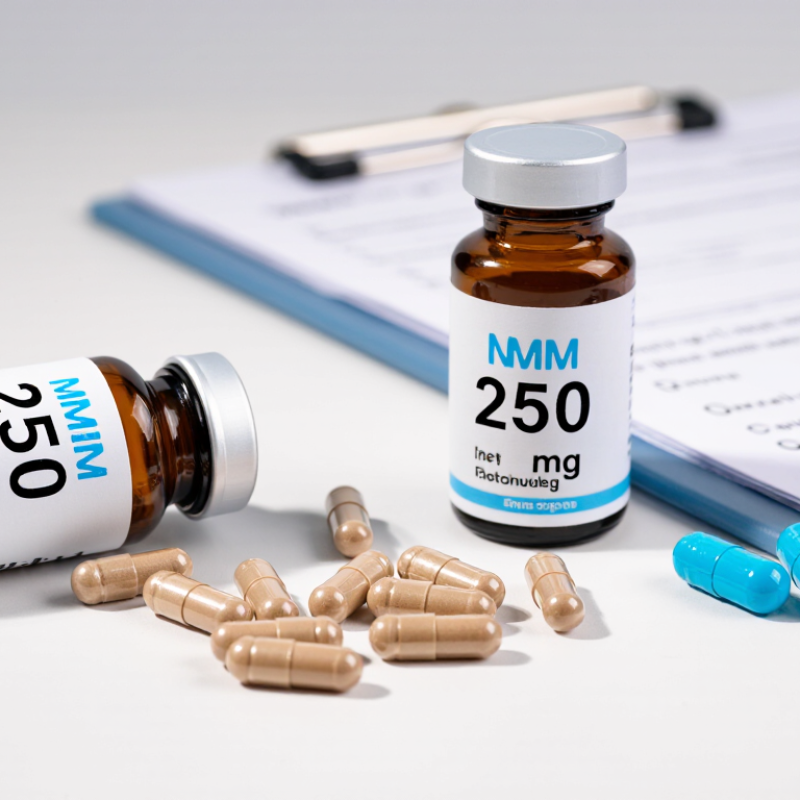
Look for β-NMN, or beta-nicotinamide mononucleotide, in the ingredient list. Check the details. “NMN complex” alone leaves the actual ingredient unclear. The beta designation identifies the form used in human NMN research. PubChem lists beta-NMN with the molecular formula C11H15N2O8P and a molecular weight of approximately 334.22 g/mol. These identifiers help distinguish the ingredient, although printing them on packaging does not prove authenticity.
Ask for a certificate of analysis matching the lot number printed on your bottle. Trace the batch. The document should identify the laboratory, testing date, analytical methods, and measured NMN content. Chromatographic purity and ingredient identity answer different questions, so look for both. A “99% purity” claim can be misleading when the report omits the method or measures only relative peak area. Look for identity testing using suitable reference standards, supported by methods such as mass spectrometry or nuclear magnetic resonance. Request the ingredient manufacturer’s name and manufacturing country, rather than relying solely on the distributor’s address.
Research provides context for why ingredient identity matters. Yoshino and colleagues’ 2021 Science study enrolled 25 postmenopausal women with prediabetes and overweight or obesity. Participants received either 250 mg of NMN daily or a placebo for 10 weeks. That small, specific study cannot establish benefits for every buyer or validate an unrelated retail product. Even a detailed certificate leaves questions if its authenticity cannot be confirmed with the issuing laboratory.
Assess Human Evidence: 250 mg/Day Studied for 10 Weeks in 25 Women
A human trial offers a useful checkpoint when buying NMN, or nicotinamide mononucleotide.
Published in Science in 2021, it studied 25 postmenopausal women with overweight or obesity and prediabetes. Participants received either 250 mg of NMN daily or a placebo for 10 weeks. Researchers reported improved skeletal muscle insulin sensitivity in the NMN group.
That matters. However, the study did not establish longer lifespan, visible rejuvenation, or benefits for everyone. Body weight and body composition did not significantly improve.
Tips:
-
Compare product claims with the actual participants, dose, duration, and measured outcomes. A bottle promising “anti-aging results” goes beyond what this trial demonstrated.
-
Look for independent testing that verifies ingredient identity, potency, and relevant contaminants. Check whether the testing report matches the batch number printed on the bottle.
-
More isn't automatically better. The studied 250 mg dose does not establish an ideal dose for every buyer.
The trial provides human evidence, but its small, specific population limits broader conclusions. Ten weeks also cannot establish long-term safety. It is tempting to treat a measurable laboratory improvement as something you will feel each morning. That leap deserves scrutiny.
The awkward question remains: would this particular outcome matter to you?
If you take medication or manage a health condition, discuss NMN with a qualified clinician before purchasing.
Compare Doses and Safety: 300–900 mg/Day Tested Over 60 Days
Dose comparisons deserve more attention than impressive label claims. A randomized trial studied 80 healthy adults aged 40–65 for 60 days. Participants received placebo or 300, 600, or 900 mg of NMN daily. Researchers reported increased blood NAD levels and no significant safety concerns within this small study. The source is Yi et al., GeroScience, 2023, doi:10.1007/s11357-022-00705-1. Context matters. These findings cannot establish lifelong safety or prove that NMN slows human aging.
Tips for comparing doses: check the daily serving, then calculate the capsule count. A bottle containing 150 mg capsules requires four capsules to provide 600 mg. Treat 300–900 mg as a studied range, not a personal prescription. Higher doses do not automatically offer better value or better outcomes. The trial included only 20 participants per group, limiting confidence about uncommon adverse effects.
Tips for checking quality and suitability: request a batch-specific certificate of analysis; inspect contaminant testing; discuss suitability with your clinician. The certificate should identify NMN, measured purity, the testing laboratory, and a matching lot number. Contaminant results should include heavy metals and microbial limits, with actual measurements where applicable. Bring your medication list and proposed daily dose to that discussion. Finally, compare cost per daily serving, including the capsule count you would actually use. One gap remains. Sixty days offers limited reassurance for someone considering years of supplementation, especially with existing medical conditions.
Evidence limits: This table summarizes one 60-day clinical trial and practical label-checking considerations. The study does not establish an optimal dose for everyone, and a higher dose should not be assumed to provide greater health benefits. No company, brand, or commercial product is evaluated here.
Study source: Yi L, et al. “The efficacy and safety of β-nicotinamide mononucleotide (NMN) supplementation in healthy middle-aged adults: a randomized, multicenter, double-blind, placebo-controlled, parallel-group, dose-dependent clinical trial.” GeroScience (2023).
Read the study.
Check Purity and Contaminants Through Batch-Specific Lab Reports
A purity percentage on an NMN label tells you less than a batch-specific certificate of analysis, or COA. Match the batch number. The report should identify the tested ingredient, testing date, laboratory, and analytical methods. A “99% purity” claim needs context: chromatographic peak purity does not necessarily equal 99% NMN by weight. Look for identity testing and a quantitative assay with clearly stated units. An independent laboratory adds confidence, especially when its accreditation covers the relevant testing methods.
Contaminant results deserve equal attention. Look for lead, arsenic, cadmium, mercury, and microbial testing, including relevant pathogens. Residual solvent testing may also matter, depending on manufacturing methods. Numbers need context. A result marked “ND” means below the method’s detection limit, rather than proof that a substance is completely absent. Check whether detection limits and acceptance criteria are listed. Ideally, documentation should cover the finished capsules or powder, since raw-material testing cannot address contamination introduced during later processing.
Tips: Ask for the report before purchasing, then compare its batch number with the delivered container. If the laboratory offers report verification, use it. A polished PDF can still omit essential details. It is tempting to accept a high purity figure and stop reading; that shortcut deserves reconsideration. If units, methods, or sample descriptions remain unclear, request clarification before relying on the results.
7 Tips for Buying NMN Nicotinamide Mononucleotide: Check Purity and Contaminants Through Batch-Specific Lab Reports
Elemental impurities: published oral exposure reference limits to help interpret laboratory results.
These published values are pharmaceutical permitted daily exposures from ICH Q3D(R2), not measured NMN batch results or universal legal limits for dietary supplements. The arsenic and mercury values are based on their inorganic forms. Applicable supplement requirements depend on the market and product.
When reviewing an NMN batch report, check that its batch number matches the product, that it identifies the laboratory and test methods, and that it provides numerical purity and contaminant results. A high purity percentage alone does not establish low elemental contamination. Convert reported concentrations into exposure at the maximum daily serving: µg/g × grams per day = µg/day. Results reported as “not detected” should include a detection or quantification limit.
Source: ICH Q3D(R2), Guideline for Elemental Impurities, Appendix 2, Table A.2.1. Values shown are oral permitted daily exposures.
Evaluate Packaging, Storage Conditions, and Cost per Gram
Packaging deserves a close look when buying NMN, or nicotinamide mononucleotide. Choose an opaque container or protective outer packaging that limits light exposure. Check the seal. A loose cap, damaged liner, or missing tamper protection deserves attention before purchase. Look for a batch number and expiration date printed clearly on the container. A desiccant packet can help manage moisture, but it cannot compensate for poor packaging or an unreliable seal.
Storage instructions should be specific enough to follow at home, including any temperature limits and guidance after opening. Keep it dry. Avoid bathroom cabinets, sunny windowsills, and shelves beside ovens, where humidity or heat can fluctuate. Follow the product’s stated storage conditions rather than assuming refrigeration always helps. Opening a cold container in humid air may introduce condensation, so ask the supplier about handling if refrigeration is recommended. Packaging alone cannot establish stability; accessible testing documentation provides stronger support for shelf-life claims.
Compare prices using the actual amount of NMN, excluding capsule shells, fillers, and other ingredients. For example, 60 capsules containing 250 milligrams each provide 15 grams of NMN. At $45 per bottle, that equals $3 per gram, before shipping and taxes. A cheaper bulk pouch may look appealing, yet frequent opening can make moisture control more difficult. This calculation has limits: it does not establish purity, safety, or effectiveness. Check whether an independent laboratory report identifies the matching batch and reports NMN identity and purity.