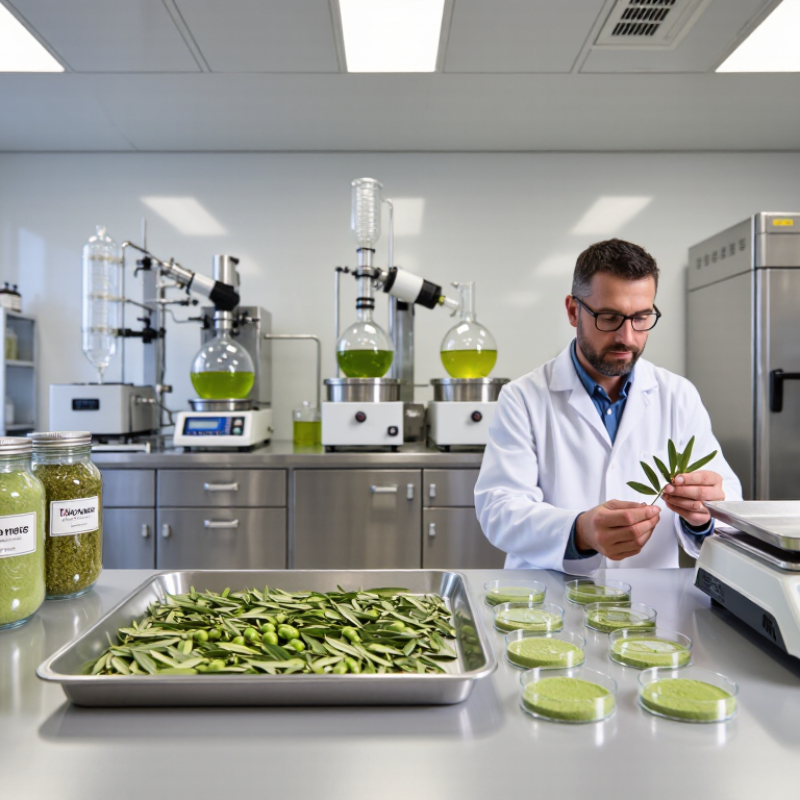
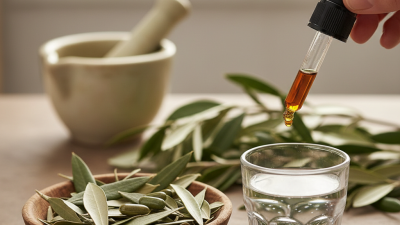
Sourcing high-quality Olive Leaf Extract in bulk requires more than comparing prices or reading attractive product descriptions. Buyers must examine the entire supply chain, from cultivar selection and harvest timing to extraction, testing, packaging, and storage. Fresh leaves can vary considerably in oleuropein content, even when they come from the same region. That difference matters.
Dr. Dimitrios Boskou, a respected authority on olive phenolic compounds, stated, “Quality begins with the raw material, not the label.” This principle remains practical for bulk purchasing. Ask suppliers for botanical identification, harvest records, extraction details, and a recent certificate of analysis. The report should show oleuropein levels, moisture, microbiological results, heavy metals, pesticide residues, and solvent limits. Independent laboratory verification adds confidence.
Look closely.
A reliable supplier should explain whether the leaves are washed, dried, milled, and extracted under controlled conditions. Temperature and oxygen exposure can influence stability. Packaging should protect the powder or liquid from light, humidity, and unnecessary heat. Traceability is equally important. Each batch should connect to a defined production date and raw-material source.
Still, no document proves everything. A polished certificate can hide weak sampling or outdated testing. Request retain samples, compare multiple batches, and assess consistency before signing a large contract. Sensory checks may also reveal problems, although they cannot replace laboratory analysis. The strongest sourcing decision combines technical evidence, supplier experience, transparent communication, and a willingness to question convenient claims. That extra caution may slow purchasing, but it can prevent costly quality failures later.
Bulk olive leaf extract is a concentrated ingredient made from olive leaves and supplied in larger quantities.
It may appear as a fine green-brown powder or a liquid concentrate. Many buyers evaluate oleuropein, a key naturally occurring compound, when comparing extracts. However, a higher percentage does not automatically mean better quality.
Quality begins with the raw leaves.
Their growing region, harvest timing, drying temperature, and storage conditions can change the final profile. Experienced suppliers should provide batch records, clear specifications, and a certificate of analysis.
That document should confirm identity, oleuropein content, microbiological limits, heavy metals, pesticides, and residual solvents.
Small details matter. A sample may look consistent while testing reveals uneven potency or excess moisture.
Traceability is also important. Buyers should be able to connect each batch with its source material and processing date.
The extraction method deserves careful attention, because harsh processing can affect color, aroma, and compound stability. I would not rely on attractive color alone. It is an easy mistake.
Independent laboratory testing adds stronger evidence than a supplier’s general statement.
Reliable sourcing also includes realistic lead times, sealed packaging, and storage guidance. A supplier who answers technical questions clearly usually inspires more confidence than one offering only the lowest price.
Still, no document replaces thoughtful review; specifications can be incomplete, and quality decisions sometimes require a second test.
When sourcing olive leaf extract in bulk, buyers should define specifications before comparing prices. Botanical identity must state Olea europaea L., leaf part, country of origin, and extraction ratio. The target marker also needs clarity. Oleuropein is common, but hydroxytyrosol may matter for certain formulations. A 2022 review in Molecules reported wide oleuropein variation across cultivars and extraction methods, from low single-digit percentages to over 40% in concentrated extracts. Therefore, “standardized extract” is incomplete without an assay range and validated test method.
Quality specifications should include moisture, particle size, microbial limits, heavy metals, pesticide residues, and residual solvents. Buyers should request HPLC chromatograms, batch-specific certificates, and stability data. USP General Chapter <561> supports testing principles for botanical articles, while USP <2023> addresses elemental contaminants. The WHO Quality Control Methods for Herbal Materials also recommends identity, purity, and contaminant testing. A high assay is not automatically a better ingredient. Excessive processing may improve concentration but reduce traceability. That trade-off deserves review.
Tips: Define acceptance limits, not only target values. Ask whether oleuropein testing uses HPLC with reference standards. Confirm packaging protects the powder from light, oxygen, and humidity. Review at least three recent batches, because one attractive certificate can hide seasonal variation. I would also question vague claims such as “premium grade.” They sound useful, but they are not specifications.
How to Source High Quality Olive Leaf Extract in Bulk?
A dependable supplier should explain every step from leaf collection to final packaging. Ask for the botanical name, growing region, harvest season, and extraction method. The supplier should provide a current certificate of analysis for each batch. Check oleuropein content, moisture, microbial limits, heavy metals, pesticide residues, and residual solvents. Do not accept vague statements such as “premium quality.”
Review the testing laboratory and its methods. Independent laboratory results are more useful than internal figures alone. Confirm whether certificates match the exact batch number on the sample. Request traceability records, production dates, storage conditions, and packaging specifications. Ask whether the supplier follows documented quality systems. Verify certifications directly, including their scope and expiry dates. Details matter.
Before signing a large contract, order a representative sample. Keep part of it sealed for comparison. Test it through an accredited laboratory when the order value justifies the cost. I once treated a polished certificate as sufficient. That was a mistake. Documents can be accurate, outdated, or linked to another batch. Supplier communication also reveals practical reliability. Do they answer technical questions clearly? Do they explain deviations without hiding them? Confirm minimum order quantities, lead times, replacement procedures, and shipping conditions in writing. A low price may reflect weaker testing, older material, or inconsistent standardization. Ask uncomfortable questions early.
This illustrative scorecard prioritizes the checks commonly used to verify bulk olive leaf extract suppliers. Identity and active-marker testing confirm product authenticity, while microbiological, heavy-metal, pesticide, traceability, and stability reviews help assess safety, consistency, and supply reliability. The weighting is a procurement framework rather than a universal regulatory requirement; acceptance limits should be confirmed for the destination market and product specification.
How to Source High Quality Olive Leaf Extract in Bulk?
What Quality Tests Confirm Olive Leaf Extract Purity and Safety?
Reliable sourcing begins with a representative sample, not a polished brochure. Ask for the botanical name, plant part, harvest region, extraction method, and batch number. The supplier should provide a current certificate of analysis for each lot. Traceability matters when several pallets look identical.
Identity testing can use HPTLC or LC-MS fingerprinting to confirm olive leaf origin. HPLC should measure oleuropein and other declared markers. A high marker result alone proves little. Some extracts may contain undeclared carriers or concentrated additives. Test for microbial limits, yeast, mold, and pathogens. ICP-MS can detect lead, arsenic, cadmium, and mercury at low levels. Pesticide screening and residual-solvent analysis add important protection.
Inspect moisture, color, odor, particle size, and dispersibility during receiving. These simple checks often reveal storage problems. Test for aflatoxins when regional risk or material history requires it. Compare laboratory results with the specification, not just the supplier’s marketing claims. Independent testing is stronger than paperwork alone. Still, laboratories can make sampling errors. I once treated a clean certificate as final evidence, which was too optimistic. A second sample from the sealed bulk container may tell a different story. Confirm the facility’s quality system, calibration records, deviation process, and retention samples before approving regular supply.
| Quality Dimension | Recommended Test or Standard | Example Acceptance Criteria for Bulk Purchasing | Why It Confirms Quality | Records to Request |
|---|---|---|---|---|
| Botanical Identity | Macroscopic and microscopic examination; HPTLC or HPLC fingerprint against an authenticated Olea europaea leaf reference. | Passes the approved botanical identity profile with no evidence of substitution or adulteration. | Confirms that the material is olive leaf extract rather than another plant or an undeclared carrier. | Certificate of analysis, chromatographic fingerprint, botanical name, plant part, country of origin, and authentication procedure. |
| Oleuropein Assay | Validated HPLC-UV/DAD or HPLC-MS method using an oleuropein reference standard. | Result falls within the declared specification. For example, an extract marketed as “20% oleuropein” should have a buyer-approved assay range centered on 20.0%, with the exact range defined in the specification. | Verifies potency and batch-to-batch consistency; oleuropein is a principal marker compound in olive leaf extract. | HPLC chromatogram, validated method summary, reference-standard information, assay result, and calculation basis such as dry basis or as-is basis. |
| Extract Ratio and Solvent | Review manufacturing records and verify the declared native-extract ratio and extraction solvent. | The actual extract ratio, such as 10:1, matches the purchase specification; the solvent system is declared and traceable. | Prevents misleading potency claims and helps evaluate residual-solvent and process risks. | Batch manufacturing record, raw-material quantity, extract yield, solvent declaration, and process flow diagram. |
| Moisture or Loss on Drying | Validated gravimetric loss-on-drying method or Karl Fischer titration where appropriate. | A practical buyer-set target is commonly ≤5–8%, unless the formulation or carrier requires another limit. | Excess moisture can promote microbial growth, caking, hydrolysis, and loss of storage stability. | Moisture result, test method, sampling date, and storage-condition statement. |
| Microbial Quality | USP <61>, USP <62>, Ph. Eur. 2.6.12/2.6.13, or an equivalent validated method. | Example botanical-material limits: TAMC ≤105 CFU/g; TYMC ≤104 CFU/g; Salmonella absent in 25 g; Escherichia coli absent in 1 g. Confirm the applicable market standard. | Detects microbial contamination that may threaten consumer safety or shorten shelf life. | Microbial test report, sampling plan, laboratory accreditation status, and specification version. |
| Heavy Metals and Elemental Impurities | ICP-MS or ICP-OES; evaluate against USP <232>/<233>, Ph. Eur. 2.4.20, or destination-market requirements. | Lead, cadmium, arsenic, and mercury comply with the applicable limits based on daily dose, product category, and jurisdiction. | Confirms that soil, water, equipment, or processing contamination is controlled. | Element-by-element results in mg/kg or µg/g, analytical detection limits, digestion procedure, and laboratory report. |
| Pesticide Residues | Multi-residue LC-MS/MS and GC-MS/MS screening using a risk-based panel appropriate for the growing region. | All detected residues comply with the maximum residue limits of the destination market; non-authorized substances remain below the applicable reporting or action limits. | Verifies agricultural and collection practices and reduces contamination-related regulatory risk. | Full pesticide panel, LOQs, detected-residue list, farm or collection-area information, and laboratory accreditation. |
| Mycotoxins | Validated HPLC-FLD or LC-MS/MS method for aflatoxin B1, B2, G1, and G2; include ochratoxin A where required. | Where applicable to the destination market, a commonly used food-control benchmark is aflatoxin B1 ≤5 µg/kg and total aflatoxins ≤10 µg/kg; verify the legally applicable limit. | Controls toxins that may develop when botanical materials are improperly dried or stored. | Mycotoxin report, LOQs, storage history, drying controls, and sampling procedure. |
| Residual Solvents | Headspace GC-FID or GC-MS in accordance with ICH Q3C or an equivalent pharmacopoeial method. | Solvent-specific limits apply. Examples from ICH Q3C Class 3 and Class 2 limits include ethanol 5,000 ppm, methanol 3,000 ppm, and n-hexane 290 ppm. | Confirms that extraction and drying have not left unsafe levels of volatile organic solvents. | Solvent declaration, GC chromatogram, quantified results, and confirmation of the applicable ICH Q3C category. |
| Foreign Matter and Adulterants | Visual inspection, microscopy, identity fingerprinting, and targeted testing for undeclared fillers or synthetic marker addition. | No visible foreign matter; no undeclared plant material, pharmaceutical adulterant, synthetic oleuropein, or unauthorized carrier. | Protects against economic adulteration and contamination during harvesting, milling, and extraction. | Foreign-matter inspection record, chromatographic fingerprint, allergen statement, and complete excipient/carrier declaration. |
| Ash and Inorganic Matter | Total ash and acid-insoluble ash according to a recognized pharmacopoeial gravimetric method. | Set limits from authenticated reference batches and the product specification; abnormal elevation triggers investigation. | Helps identify excess soil, sand, mineral contamination, or dilution with inorganic material. | Ash results, method reference, historical batch trend, and deviation-investigation records when results are atypical. |
| Physical and Packaging Controls | Appearance, color, odor, particle-size distribution, bulk density, net weight, seal integrity, and packaging-material review. | Uniform powder with no abnormal odor, visible contamination, leakage, or package damage; particle size and bulk density meet the agreed manufacturing specification. | Supports consistent blending, filling, transport, and protection from moisture, oxygen, and light. | Finished-product inspection record, packaging specification, batch photographs where appropriate, and packaging compatibility statement. |
| Stability and Shelf Life | Real-time and accelerated stability testing following an applicable stability protocol, such as ICH Q1A principles. | Oleuropein assay, moisture, appearance, and microbial quality remain within specification throughout the declared shelf life under the stated storage conditions. | Demonstrates that the bulk extract remains potent and safe during warehousing and transport. | Stability protocol, time-point results, retest or expiry date, recommended storage conditions, and shipping-temperature limits. |
| Batch Traceability and Supplier Controls | Supplier qualification, audit, change-control review, and lot-level traceability from olive leaf origin to finished extract. | Every lot has a unique batch number, complete CoA, defined sampling plan, retained sample, and documented deviation and recall procedures. | Ensures that test results are linked to the supplied batch and that quality remains consistent over repeated bulk orders. | GMP or quality-system records, audit summary, CoA, change-notification policy, recall procedure, and retained-sample statement. |

Sourcing bulk olive leaf extract requires more than comparing price per kilogram. The International Olive Council’s 2024 market data placed global olive oil production near 2.5 million tonnes in 2023/24. This scale still hides major differences in cultivar, harvest timing, and leaf handling. Ask each supplier for botanical identity, extraction solvent, oleuropein level, total polyphenols, moisture, and batch-specific test results. A polished certificate of analysis is useful, but it does not prove every shipment.
Compare offers on usable active content, not only kilograms. Check minimum order quantity, sample policy, lead time, packaging, Incoterms, and payment terms. Request tests for pesticides, heavy metals, residual solvents, microbiological limits, and adulteration. USP dietary supplement quality guidance supports identity, strength, purity, and contaminant control. Place a purchase order with agreed specifications, tolerance limits, a retain sample, and a complaint procedure. I would avoid vague terms such as “premium grade.” They sound reassuring and explain very little.
Tips: Store sealed extract in its original food-grade container, away from light, heat, moisture, and strong odors. Follow the supplier’s validated temperature range. Record lot number, opening date, and warehouse humidity. Do not freeze powder unless stability data supports it; condensation can damage the material. A simple inspection under poor warehouse lighting may miss clumping or discoloration. That is an uncomfortable, but practical, reason to schedule periodic re-testing.