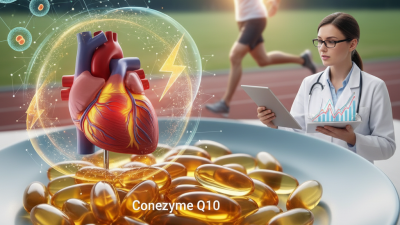
What Is Coenzyme Q10 and What Is It Used For?
Coenzyme Q10, often called CoQ10, is a compound the body makes naturally. It helps cells produce energy inside structures called mitochondria. CoQ10 also acts as an antioxidant, helping protect cells from certain forms of damage. Small amounts occur in foods such as oily fish, meat, and nuts, though supplements provide larger doses. The body’s levels can change with age and health. That is not the whole story.
People use Coenzyme Q10 supplements for several reasons, including general wellness and to explore possible support for particular health concerns. Researchers have studied it in areas such as migraine prevention and heart health, but findings differ across conditions and studies. A supplement is not a proven substitute for prescribed treatment. Evidence varies. The label can look simple; the research is less tidy.
This guide explains what Coenzyme Q10 is, how it works, and what it may be used for. It also looks at what current evidence can and cannot show, common side effects, and practical safety questions. CoQ10 may interact with some medicines, including warfarin, and could affect blood pressure or blood sugar. Anyone taking medication, planning surgery, pregnant, or managing a health condition should ask a qualified healthcare professional before using it. Individual needs differ, and supplement quality can vary. Those details deserve attention, not guesswork.
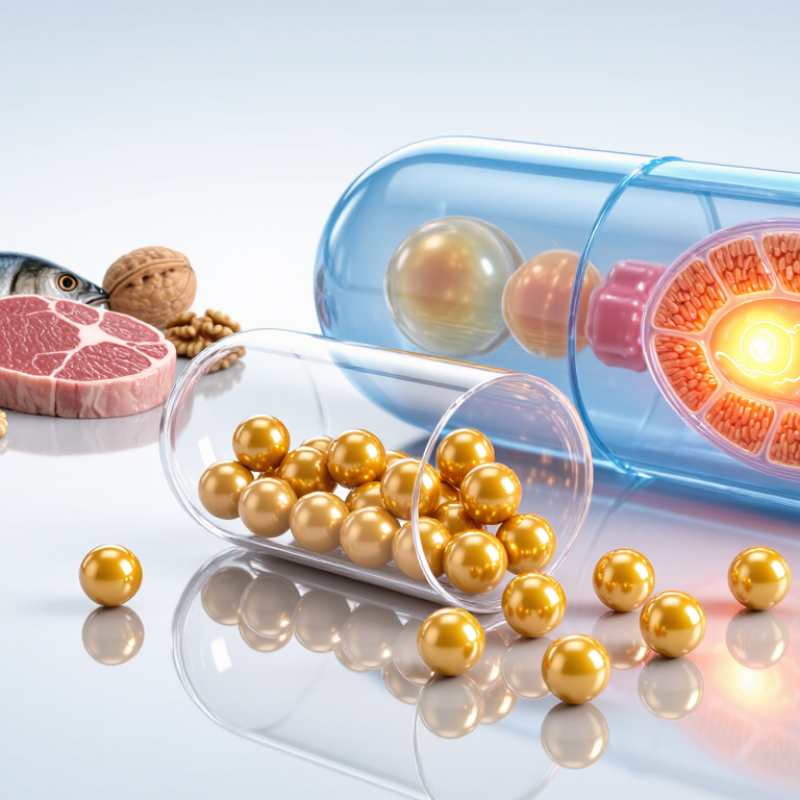
What Coenzyme Q10 Is and Where It Occurs
Coenzyme Q10, often called CoQ10, is a fat-soluble compound made naturally by the body. It is found in nearly every cell, with especially important roles in energy-producing structures called mitochondria. There, CoQ10 helps transfer electrons during the process cells use to make energy. It also works as an antioxidant, helping limit damage from unstable molecules. It is present throughout the body. CoQ10 shifts between two forms, ubiquinone and ubiquinol, as it takes up or gives away electrons. These forms are part of the same working system, not separate nutrients.
Food provides smaller amounts of CoQ10 than the body produces. Sources include oily fish, such as sardines and salmon, as well as meat, organ meats, peanuts, and some vegetable oils. The amount in a serving can vary with the food and how it is prepared. A plate of grilled fish may contain CoQ10, but it is not easy to estimate how much reaches the body. Absorption differs, too, because CoQ10 dissolves in fat and dietary context matters. Levels in blood do not always show how much is present in specific tissues. The picture is not perfectly simple: production and distribution vary among people, and research continues to clarify what those differences mean.
What Is Coenzyme Q10 and What Is It Used For?
CoQ10 in Selected Foods
Coenzyme Q10 (CoQ10) is a compound found in the body’s cells, where it helps support energy production and acts as an antioxidant. The body makes CoQ10, and it also occurs naturally in foods. Values shown are approximate milligrams per 100 g; amounts can vary with the food and how it is prepared.
How Coenzyme Q10 Supports Cellular Energy Production
What Is Coenzyme Q10 and What Is It Used For?
How Coenzyme Q10 Supports Cellular Energy Production
Coenzyme Q10, often called CoQ10, is a fat-soluble compound made by the body and found in many tissues. Its central energy role takes place inside mitochondria, the cell’s tiny power stations. There, CoQ10 carries electrons through protein complexes in the inner mitochondrial membrane. This process helps create a proton gradient, which ATP synthase uses to produce ATP, the cell’s usable energy. Small molecule, vital job.
CoQ10 also contributes to antioxidant defenses, helping limit oxidative damage during normal metabolism. That does not make it an instant energy boost. Cellular energy depends on many processes, and fatigue can have numerous causes. Researchers have studied supplemental CoQ10 in specific health conditions, but results vary by person and research question. The evidence is not perfectly tidy.
CoQ10 occurs in foods such as oily fish, meat, and nuts, though dietary amounts are generally modest. Because it is fat-soluble, absorption may be affected by how a supplement is taken. People using warfarin or blood-pressure medicines should discuss CoQ10 with a healthcare professional, since interactions may matter. A symptom or single test cannot establish that low cellular CoQ10 is causing fatigue. That distinction is easy to miss.
What Is Coenzyme Q10 and What Is It Used For? - How Coenzyme Q10 Supports Cellular Energy Production
| Dimension |
Information |
Why It Matters |
| What it is |
Coenzyme Q10 (CoQ10), also called ubiquinone, is a fat-soluble compound made naturally by the body and present in many tissues. |
It is found throughout cell membranes, with especially important roles in mitochondria. |
| Cellular energy production |
In the inner mitochondrial membrane, CoQ10 carries electrons from respiratory-chain complexes I and II to complex III. |
This electron transfer helps support the proton gradient used to make ATP, the cell’s main energy-carrying molecule. |
| Antioxidant role |
CoQ10 can switch between oxidized ubiquinone and reduced ubiquinol forms. Ubiquinol can act as an antioxidant in lipid environments. |
Its redox activity supports normal cellular processes, but it does not mean that taking supplements prevents or treats disease. |
| Forms in supplements |
Common supplement forms are ubiquinone and ubiquinol. Both participate in the body’s CoQ10 redox cycle. |
Absorption can vary with formulation and individual factors; evidence does not establish one form as best for everyone. |
| Natural sources |
Food sources include organ meats, fatty fish, meat, and some whole grains and vegetables. Amounts vary by food and preparation. |
Food generally provides smaller amounts than many supplements, and dietary intake is only one contributor to the body’s CoQ10 status. |
| Absorption |
Because CoQ10 is fat-soluble, taking it with a meal containing fat may support absorption. Products and individual absorption vary. |
Supplement amounts should not be assumed to have the same absorption or effects across different products. |
| Heart failure research |
CoQ10 has been studied as an addition to standard care for heart failure. Some clinical research suggests possible benefits, but findings and recommendations vary. |
It is not a replacement for prescribed heart-failure treatment. Anyone considering it should discuss it with a healthcare professional. |
| Migraine prevention research |
CoQ10 has been studied for reducing migraine frequency. Some evidence suggests it may help certain people, but it is not an acute migraine treatment. |
Suitability, dose, and expected benefit should be reviewed with a healthcare professional, particularly when taking other medicines. |
| Statins and CoQ10 |
Statin medicines can lower blood CoQ10 levels. However, research has not consistently shown that CoQ10 supplements relieve statin-associated muscle symptoms. |
Do not stop or change a prescribed statin without consulting the prescriber. |
| Practical takeaway |
CoQ10 is essential to normal mitochondrial electron transport and also has antioxidant functions. Supplement benefits depend on the condition and the person. |
Evidence does not support using CoQ10 as a general-purpose energy booster or as a substitute for medical care. |
Note: This table provides general educational information, not individualized medical advice. People who are pregnant, breastfeeding, taking medicines, or managing a health condition should consult a qualified healthcare professional before using a supplement.
The Main Forms of Coenzyme Q10
Coenzyme Q10, often called CoQ10, is a substance the body makes and uses in cells. It helps mitochondria produce energy and also acts as an antioxidant. CoQ10 appears in two main forms: ubiquinone and ubiquinol. Ubiquinone is the oxidized form; ubiquinol is the reduced form. The body can convert between them as needed. Both forms occur naturally in tissues, including the heart and muscles. The distinction matters, but it does not tell the whole story.
Supplements commonly provide one form or the other. Ubiquinol is sometimes marketed as easier to absorb, especially for older adults, but research does not establish that it is best for everyone. Absorption can depend on the product’s formulation, a person’s digestion, and whether it is taken with food containing fat. Small details count. A capsule taken with breakfast may be absorbed differently from one taken on an empty stomach. This is where labels can mislead: the form alone cannot predict a person’s response. People taking regular medication, particularly blood thinners, should ask a healthcare professional before using CoQ10, since interactions are possible.
Common Uses of Coenzyme Q10
Coenzyme Q10, or CoQ10, helps cells produce energy and also acts as an antioxidant. Its levels can decline with age, though that does not automatically mean a person needs a supplement. People commonly take CoQ10 for heart health, migraine prevention, or muscle symptoms they associate with cholesterol-lowering statins.
For some people with heart failure, CoQ10 may be considered alongside standard treatment. It is not a replacement for prescribed medicines, and evidence varies by condition. Some small studies suggest it may reduce how often migraines occur, but it usually takes weeks to assess any benefit. Not an instant fix. For statin-related muscle aches, research is mixed; supplementation does not reliably relieve symptoms, and new pain deserves a discussion with a clinician.
CoQ10 also appears in conversations about fertility and general energy. These uses have less certain evidence, so expectations should stay modest. A capsule may seem simple, but supplements can interact with medicines, including warfarin, and may affect blood pressure or blood sugar. Mention CoQ10 to a healthcare professional, especially before surgery or when managing a chronic condition. The evidence is uneven, which can be frustrating; more is not always better. Dosage and product quality matter, and a clinician can help decide whether trying it makes sense.
Safety, Side Effects, and Medication Interactions
Coenzyme Q10 is generally tolerated, but “natural” does not mean risk-free. The U.S. National Center for Complementary and Integrative Health lists digestive upset and insomnia among reported mild effects. In the Q-SYMBIO trial, 420 people with chronic heart failure received CoQ10 or placebo for two years; reported adverse events were similar: 13% and 19%, respectively (Mortensen et al., JACC: Heart Failure, 2014). That is reassuring, not a guarantee for every person or dose.
Interactions deserve particular care. CoQ10 may affect warfarin, insulin, and some cancer treatments, according to NCCIH. Warfarin users should not start or stop CoQ10 without speaking with their prescriber; changes could complicate anticoagulation monitoring. People using insulin or glucose-lowering medicines should ask about checking blood sugar more closely. The evidence on these interactions is not equally strong, and the effect can vary. That uncertainty matters. Bring the supplement label and your medication list to a clinician or pharmacist, especially before surgery or a medication change. If new nausea, sleep problems, or unusual bruising appears, seek professional advice rather than adjusting prescribed treatment yourself.