Leave Your Message
*Name Cannot be empty!

China Best Yeast Glucan Manufacturer and Supplier?

Choosing China’s best Yeast Glucan manufacturer or supplier takes more than comparing prices. Buyers should examine the ingredient’s source, production controls, test methods, and batch records. Ask for a current specification sheet and certificate of analysis. Check how the supplier measures beta-glucan content, and whether results can be linked to a specific lot. Details matter.

Food scientist Peter Cheung’s published work on beta-glucans supports a cautious takeaway: “Check the source, structure, and processing—not merely the label.” This is a paraphrase, not a verbatim quotation. For Yeast Glucan, useful questions include how the yeast is processed, how identity and purity are assessed, and what evidence supports each stated specification. Reliable answers should be clear and documented, not just reassuring.

A supplier’s consistency matters, too. Compare sample results with later production batches, and ask how changes are handled. Look for traceability and responsive technical support. A polished brochure is not enough. Nor is a low quote. Still, no checklist removes every uncertainty; test results and documents need careful review. This introduction sets out practical criteria for comparing Chinese manufacturers and suppliers, so buyers can assess claims with care before making a sourcing decision.

China Best Yeast Glucan Manufacturer and Supplier?

What Is Yeast Glucan and Where Does It Come From?

Yeast glucan, usually called yeast beta-glucan, is a structural carbohydrate in the cell wall of Saccharomyces cerevisiae, the common baker’s and brewer’s yeast. It is not the same as the beta-glucan in oats: yeast glucan mainly has a beta-1,3 backbone with beta-1,6 branches. These linked glucose units form a firm network around each microscopic cell. Published cell-wall reviews report that glucans make up roughly 30–60% of yeast cell-wall dry matter, though proportions vary with strain and growth conditions (Klis et al., FEMS Microbiology Reviews, 2002).

That range matters. A supplier’s stated percentage should specify whether it refers to the whole ingredient or its purified glucan fraction.

The raw material generally comes from yeast grown by fermentation, then separated and processed to recover cell-wall material. Washing and controlled enzymatic or physical treatments can reduce proteins and other wall components; drying produces a powder used in food and supplement formulations. The source is familiar, but processing changes the final profile. A useful specification identifies beta-glucan content, moisture, protein, and test methods, rather than relying on “yeast-derived” alone. The science is still nuanced: different extraction methods can produce different solubility and particle characteristics, so one number cannot describe every ingredient.

A little skepticism helps.

How Is Yeast Glucan Extracted and Processed?

Yeast glucan is commonly recovered from the cell walls of cultivated yeast. The process starts with a controlled fermentation, where temperature, nutrients, and aeration help produce consistent biomass. The harvested yeast is washed to remove residual culture medium. Clean starting material matters.

Processing then opens or removes parts of the yeast cell, using methods such as autolysis, enzymes, or carefully controlled alkaline treatment. These steps release cell-wall components, including beta-glucans. The material is separated by filtration or centrifugation, then washed to reduce soluble proteins and other residues. Conditions need close monitoring: overly harsh treatment may alter the glucan structure, while mild treatment can leave unwanted impurities.

The recovered fraction is dried, often by spray-drying or another controlled method, and milled into a uniform powder. A reliable supplier should be able to explain its process and provide batch-level data, such as beta-glucan content, moisture, protein, and microbiological results. Analytical methods and specifications can differ, so figures are best compared using the same measurement basis. The powder may look simple. Its quality depends on details that are easy to miss.

What Properties and Applications Define Yeast Glucan?

Yeast glucan is a cell-wall polysaccharide, commonly rich in beta-1,3 and beta-1,6 linkages. Its structure and particle size affect solubility, dispersibility, and performance in finished products. Researchers study its interactions with immune pathways, but results depend on the glucan source, processing, and dose. It is not a medicine. In foods and supplements, yeast glucan is used in powders, capsules, and functional blends; cosmetic formulations may use it for skin-conditioning functions.

Market data offers useful context, but not proof of efficacy. Grand View Research’s 2023 Beta-Glucan Market report estimated the global market at USD 455.3 million in 2022 and projected a 7.5% compound annual growth rate from 2023 to 2030. This figure covers beta-glucans from multiple sources, not yeast glucan alone. One detail deserves scrutiny: extraction and purification can change molecular structure, so specifications and study results may not be directly comparable.

Tips: Check the source, beta-linkage profile, purity, and particle size on technical documents. Ask for batch-specific testing. A neat label is not enough. Review formulation compatibility and supporting evidence before making product claims.

China Best Yeast Glucan Manufacturer and Supplier? What Properties and Applications Define Yeast Glucan?

Yeast β-glucan is a structural polysaccharide, typically featuring a β-(1→3) backbone with β-(1→6) branches. The chart shows approximate proportions of major components in the Saccharomyces cerevisiae cell wall—not the specification of a purified yeast-glucan product.

Reported cell-wall ranges vary with yeast strain and growth conditions and are not additive. Yeast β-glucan is used in dietary supplements and researched for immune-related effects; yeast-derived ingredients can also be used in food formulations for functional and textural properties.

How Can Buyers Evaluate Yeast Glucan Quality?

Buyers evaluating yeast glucan should look beyond a headline purity figure. Request the product specification, a recent batch certificate of analysis, and the test method used for beta-glucan content. Different methods may produce results that are not directly comparable. Check whether values are reported on a dry basis and how moisture is controlled. Small details matter.

Review the stated yeast source, composition, and manufacturing controls. Ask for data on protein, residual components, microbial limits, and heavy metals, where relevant to the intended application. Check that the analytical methods and acceptance limits are clearly identified. A pale powder is not proof of higher quality; color and appearance can vary with processing. Even a neat certificate is not the whole story.

Compare documents from several production lots, not just one sample. Look for consistent test results, clear lot identification, and traceable records. Request a representative sample and assess its appearance, odor, dispersibility, and performance under your own formulation conditions. Ask how the supplier handles deviations and retains batch records. One point is easy to miss: a material can meet its specification yet behave differently in a finished product. Verify both the paperwork and practical fit before setting purchasing criteria.

What to Consider When Choosing a Chinese Yeast Glucan Supplier?

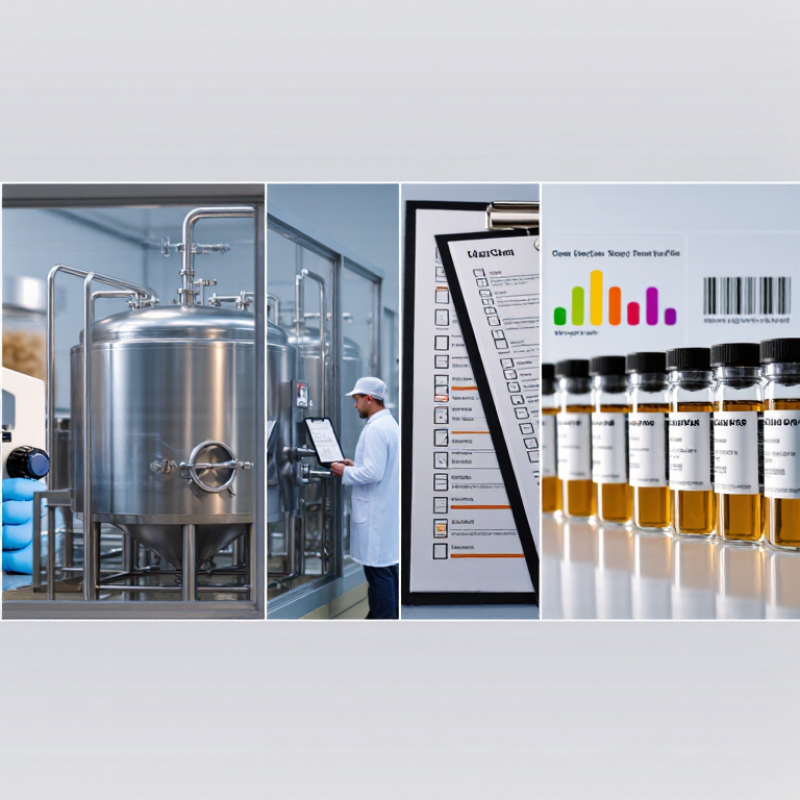
Choosing a Chinese yeast glucan supplier starts with clear product specifications. Ask which yeast source is used and how the glucan is extracted. Request a recent certificate of analysis for a specific production lot, not a generic sample. Check the test method, beta-glucan content, moisture, particle size, and microbiological results. Methods matter. A total-polysaccharide figure alone may not show how much beta-glucan the product contains. Compare the supplier’s specification with your intended application and market requirements.

Ask how batches are tracked, how raw materials are checked, and what happens when a result falls outside specification. Reliable suppliers should explain these steps plainly and provide supporting records. If possible, assess a sample and compare its appearance, dispersibility, and test results with the stated specification. A factory audit or detailed production questionnaire can help clarify quality controls, though neither removes every risk. No document catches every variation. Small differences between lots may still occur, so discuss tolerances and change notifications before ordering. A supplier’s willingness to answer technical questions is useful evidence, but it is not proof on its own.

China Best Yeast Glucan Manufacturer and Supplier? - What to Consider When Choosing a Chinese Yeast Glucan Supplier?

Evaluation Dimension What to Check Useful Evidence Practical Guidance
Product identity and specification Confirm whether the material is purified yeast beta-glucan, yeast cell-wall material, or another yeast-derived ingredient. Check the declared beta-glucan content, appearance, solubility or dispersibility, and intended grade. Current product specification, ingredient description, and batch-specific certificate of analysis (CoA). Compare products only when their identity, test basis, and grade are clearly stated.
Testing and analytical methods Ask how beta-glucan is measured, whether results are reported on an as-is or dry-weight basis, and how the method distinguishes beta-glucan from other carbohydrates. Test method references, sample CoAs, and laboratory scope or accreditation details where applicable. Use the same or demonstrably comparable methods when evaluating assay values from different suppliers.
Quality management Review the quality system, batch traceability, change control, complaint handling, and procedures for investigating out-of-specification results. Valid quality-system certificates, audit information, quality procedures, and traceability records. Verify certificate scope, validity, and issuing body rather than relying on a certificate logo alone.
Microbiological and chemical controls Check relevant microbial limits and risk-based chemical contaminant testing for the product, intended use, and destination market. Recent batch test results, defined acceptance criteria, and third-party reports when required. Requirements differ by application and jurisdiction; agree on applicable limits before placing an order.
Manufacturing and process control Clarify whether the supplier manufactures the ingredient or trades it, and ask about raw-material controls, process consistency, and production-site oversight. Facility information, process overview, site audit options, and documented supplier controls. A clear account of the manufacturing and supply chain helps assess traceability and continuity.
Regulatory and market documentation Confirm that the documentation supports the product’s intended use and the regulatory requirements in the importing market. Product and allergen statements, safety data where relevant, origin documents, and applicable compliance declarations. Do not assume that a document or approval for one market automatically applies to another.
Stability and packaging Review shelf life, recommended storage conditions, packaging protection, and whether the product is sensitive to moisture or other handling conditions. Stability data, storage instructions, packaging specifications, and lot/date coding details. Check that the proposed packaging and transport conditions suit the planned route and storage environment.
Supply capacity and lead time Ask about minimum order quantity, typical production and dispatch lead times, available capacity, and plans for managing supply interruptions. Written quotation, delivery schedule, capacity confirmation, and contingency arrangements. Treat lead times and capacity as order- and season-dependent; confirm them for each purchase.
Samples and technical support Evaluate a representative sample in the intended formulation and assess the supplier’s response to technical questions and specification changes. Sample identification, matching CoA, application guidance, and documented communication. Confirm that the tested sample and commercial product are made to the same agreed specification.
Total cost and trade terms Compare unit price alongside minimum order quantity, packaging, testing, freight, payment terms, and the agreed delivery basis. Itemized quotation, Incoterms® rule and named place, payment terms, and any additional charges. Compare like-for-like delivered costs and specifications, not unit price alone.

Note: Supplier performance should be assessed using current documents, representative samples, and requirements specific to the intended application and destination market.